

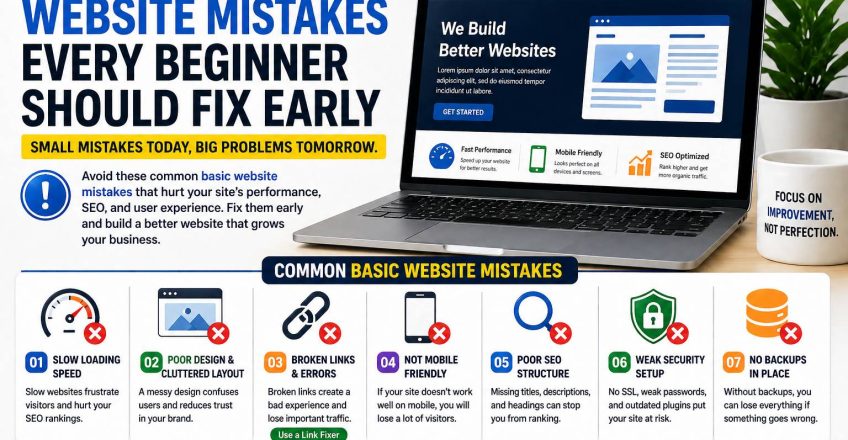

Starting a website feels exciting. You choose a domain, set up pages, add images, and hope everything will work perfectly. But many beginners make small decisions that quietly create bigger problems later. Slow speed, poor design, weak SEO, and low conversions often come from a few basic website mistakes that could have been fixed early.basic website mistakes
The good news is that most of these issues are not difficult to solve. You do not need to be a developer or a technical expert to improve your site. You simply need to understand which areas matter most and take action before bad habits grow. Once you learn how to spot basic website mistakes, you can build a website that feels faster, clearer, and more professional from the beginning.basic website mistakes
Poor Planning Creates the First Basic Website Mistakes
One of the biggest problems beginners face is launching a website without a clear plan. They focus on going live quickly instead of thinking about structure, user journey, and long-term goals. This leads to basic website mistakes such as confusing navigation, weak page layout, missing calls to action, and content that does not guide the visitor anywhere useful.
A website should have a purpose. It should help users understand who you are, what you offer, and what they should do next. If your homepage feels crowded, your menu is unclear, or your service pages do not answer basic questions, users will leave. Many beginners ask, what are common web design mistakes to avoid, and the answer often starts here. A website should not confuse people. It should make every important action feel simple.
Good planning also helps you avoid random design decisions. When there is no structure, pages become inconsistent, and that hurts trust. Visitors feel more comfortable on websites that look organized and easy to use. A clean plan always leads to a better experience.basic website mistakes
Slow Speed and Heavy Design Hurt Performance
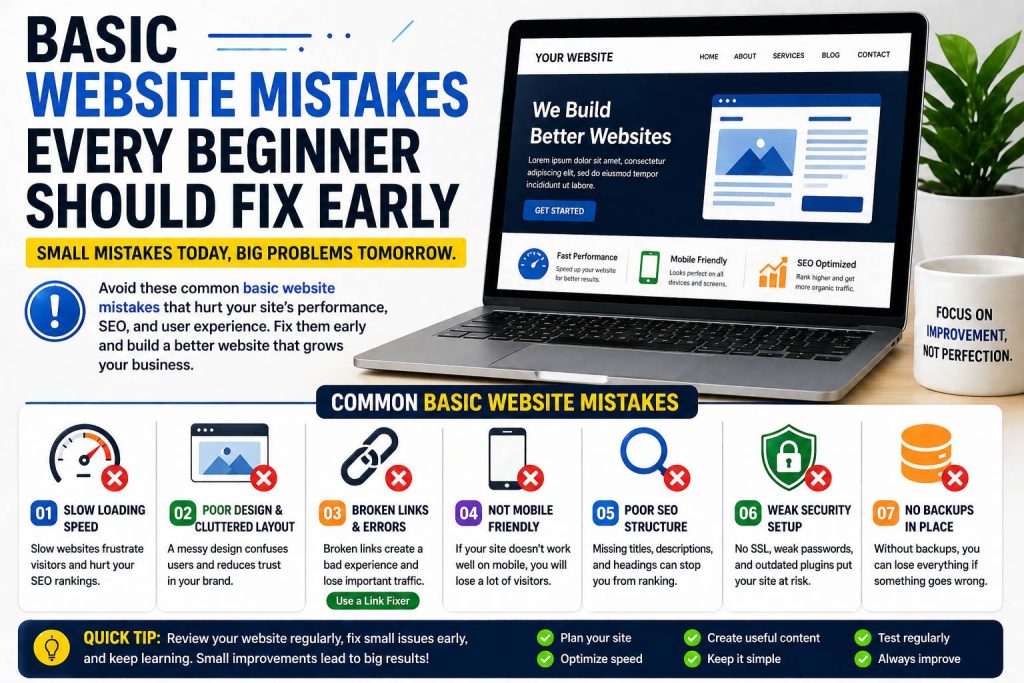
A beautiful website is not enough if it loads slowly. Speed matters because users expect pages to open fast, especially on mobile devices. Some of the most damaging basic website mistakes happen when beginners upload oversized images, choose heavy themes, or install too many plugins without checking the effect on performance.
This is where many web design mistakes become technical problems too. A design may look impressive, but if it depends on large animations, too many fonts, or oversized visual elements, it slows the website down. Some of the top website design mistakes happen when style becomes more important than usability. Visitors do not want to wait for a fancy effect to load. They want information, clarity, and smooth navigation.
The smartest approach is to keep your design simple and fast. Use optimized images, lightweight themes, and only the plugins you truly need. Clean design almost always performs better than cluttered design. When a site feels smooth, visitors stay longer and trust it more.basic website mistakes
Weak SEO Structure Stops Good Content From Ranking
Many beginners assume that publishing a few blog posts or service pages is enough to rank on Google. In reality, SEO needs structure. Another group of basic website mistakes includes missing meta titles, poor heading use, weak internal linking, thin content, and unclear URLs. These issues make it harder for search engines to understand your website.basic website mistakes
A page should have one clear topic, useful headings, natural keyword placement, and content that matches user intent. It should also connect properly with other pages on the site. Internal linking matters because it helps both users and search engines move through your content easily. If your website has broken links, outdated URLs, or missing references, you should review them with a link fixer mindset. Whether you use a tool or do it manually, broken links make your site feel neglected and hurt trust.basic website mistakes
SEO also depends on readability. If your content looks crowded, uses weak headings, or answers questions poorly, users leave quickly. That sends bad signals to search engines. Good SEO is not only about keywords. It is about usefulness, clarity, and structure.
Design Mistakes Can Reduce Trust and Conversions
Some basic website mistakes do not only hurt SEO or speed. They also hurt how people feel about your brand. A website that looks outdated, inconsistent, or hard to use makes visitors question the quality of your business. Trust drops quickly when colors clash, buttons are unclear, pages feel crowded, or important contact details are hard to find.
This is why layout and usability matter so much. Visitors should never feel lost. They should understand your message in seconds. Your buttons should stand out. Your contact page should be easy to find. Your mobile version should feel just as clear as your desktop version. These details may seem small, but they shape the first impression people get from your brand.
Many beginners make the mistake of copying large websites without understanding why those sites work. They add too many sections, too much text, or too many visual effects. That creates confusion instead of confidence. Strong websites are simple, focused, and easy to scan. Good design supports action. It does not compete with it.
Technical Problems Get Worse When Ignored
Not every website problem is visible at first. Some basic website mistakes stay hidden until they create serious trouble. Outdated plugins, missing backups, weak security, poor hosting, and compatibility issues often grow quietly in the background. Beginners sometimes ignore these areas because they do not look urgent, but that can become expensive later.
For example, a plugin conflict or hosting issue can trigger a wordpress website white screen, which leaves the entire website blank and unusable. Many site owners panic when this happens, but the real problem usually started much earlier. Delayed updates, poor-quality plugins, or weak hosting often create the conditions for that kind of failure.
Backups are also essential. If something breaks, you need a way to restore the site quickly. Security matters too. Weak passwords, no SSL, and unsafe admin settings can put your site at risk. A website does not need to be large to become a target. Even small sites need basic protection in place from day one.
Fix the Right Things Early and Grow Faster
The best part about these problems is that they are fixable. Most basic website mistakes do not require a full redesign. They require better decisions. Start with the essentials. Improve your speed, clean up your layout, simplify navigation, strengthen SEO basics, and remove technical risks before they grow.
Review your homepage from the visitor’s point of view. Ask yourself if the message is clear, the pages are easy to use, and the site feels trustworthy. Then check the technical side. Update your tools, fix broken links, optimize images, and make sure your hosting can support your growth. Small improvements in these areas can create a big difference in rankings, conversions, and user experience.
Final Thoughts
Every successful website starts with a strong foundation. If you ignore basic website mistakes, they slowly reduce speed, trust, visibility, and performance. If you fix them early, your site becomes easier to manage, easier to rank, and much more useful for real visitors.
The goal is not perfection. The goal is progress. When you identify basic website mistakes early and improve them one by one, your website becomes a stronger asset for your business instead of a weak point that holds you back.
Our Tursted User :
Share this Post

Basic Website Security Errors You Should Never Ignore
EcomiHost BlogBest Hosting for Multiple Websites in One Plan
EcomiHost Blog