

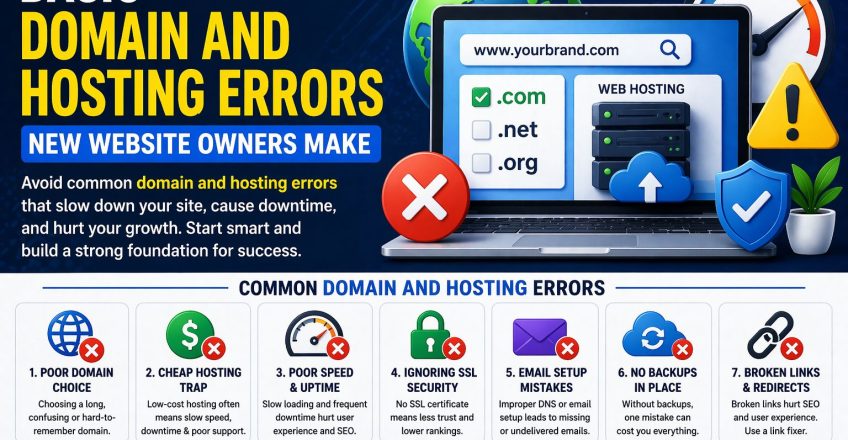

Starting a new website feels exciting. You pick a name, buy a domain, choose a hosting plan, and expect everything to work smoothly. But many beginners make small decisions in the beginning that later turn into bigger problems. Slow speed, email issues, poor security, confusing setup, and wasted money often come from simple domain and hosting errors that could have been avoided with the right guidance. domain and hosting errors
Most new website owners focus heavily on design, pages, and branding. Those things matter, but your domain and hosting setup create the foundation for everything else. If the foundation is weak, the website may look good but still perform badly. That is why understanding domain and hosting errors early is so important for anyone launching a business website, blog, portfolio, or online store.
Why Your Domain and Hosting Setup Matters More Than You Think
Your domain is your online identity, and your hosting is the engine that keeps your website running. If either one is chosen badly, the whole experience suffers. Many people ask, what are common web design mistakes to avoid, but they often forget that a beautiful layout cannot fix weak hosting, poor DNS setup, or the wrong domain choice. In many cases, what looks like a design issue is actually a technical setup problem. domain and hosting errors
This is why domain and hosting errors can hurt your business in ways that are not obvious at first. A hard-to-remember domain can weaken branding. A poor hosting plan can create slow load times and downtime. Bad DNS setup can delay email delivery or keep the site offline after launch. Even common web design mistakes become harder to fix when the site is built on a weak hosting environment. A good website needs strong structure behind the design, not just a polished appearance.
Choosing the Wrong Domain Name Creates Long-Term Problems
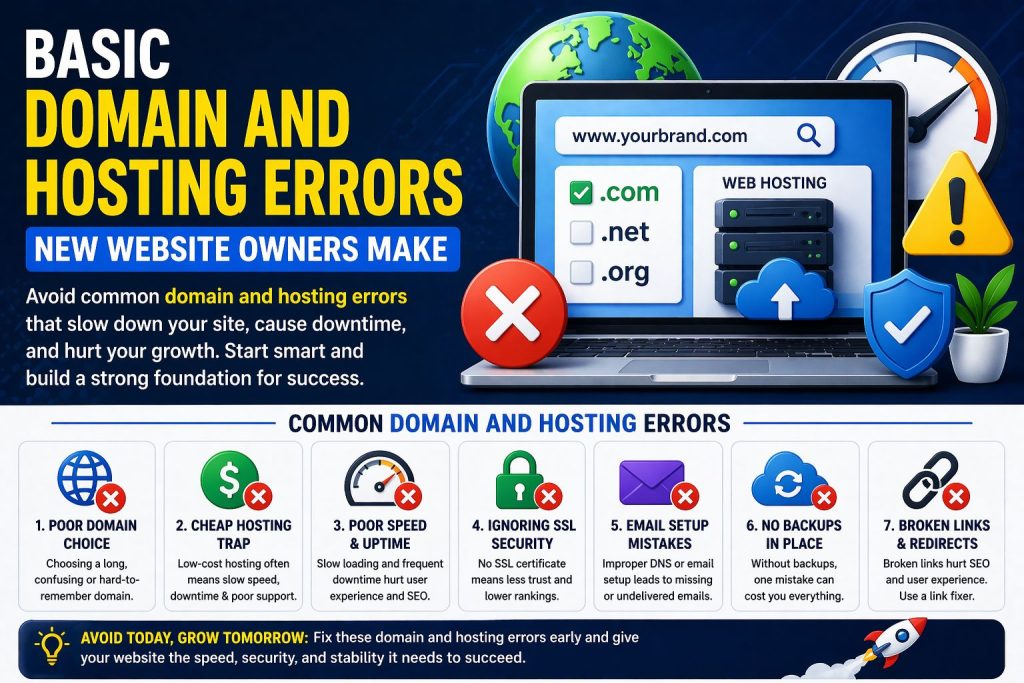
One of the first mistakes beginners make is choosing a domain name without thinking about branding, clarity, and trust. Some pick names that are too long, hard to spell, or full of hyphens and numbers. Others choose an extension that does not fit their market or business type. These decisions may seem small, but they can affect how easily people remember and trust your website. domain and hosting errors
Many domain and hosting errors begin at this exact stage. A weak domain name can confuse customers, make word-of-mouth promotion harder, and reduce credibility. The best domain names are simple, readable, and connected to your business identity. They should be easy to say, easy to type, and easy to remember. If people have to guess the spelling or extension, you are already creating friction.
Another common issue is failing to secure related versions of the domain. For example, some businesses buy one extension and ignore other relevant variations. Later, that creates brand confusion or even opens the door for competitors or copycats. New owners should also check renewal pricing and domain control carefully, because losing access to the domain can create serious trouble. These are classic domain and hosting errors that feel small early on but become expensive later. domain and hosting errors
Buying Hosting Based Only on Price Is a Costly Mistake
A cheap hosting offer can look very attractive when you are starting out. Many beginners compare only the price and ignore the actual features behind the plan. That is one of the most common domain and hosting errors new website owners make. Low pricing may save a little money today, but poor performance often costs much more in lost traffic, weak SEO, and support headaches. domain and hosting errors
A strong hosting plan should give you more than server space. It should support speed, uptime, security, backups, SSL, and email reliability. If your hosting provider cannot offer stable performance, visitors may leave before your pages fully load. Search engines may also struggle to trust a slow or unstable site. Some of the top website design mistakes are blamed for poor user experience when the real problem is weak hosting underneath. domain and hosting errors
This is also where technical issues can grow unexpectedly. A poorly configured server, low memory limit, or plugin conflict can trigger a wordpress website white screen, especially on WordPress websites. Beginners often panic when they see a blank page, but the root cause is often poor setup, bad hosting quality, or a conflict that a better environment could have handled more safely. Good hosting is not a luxury. It is one of the smartest investments you can make in your website. domain and hosting errors
Ignoring DNS, SSL, Email, and Backups Leads to Avoidable Problems
A website launch is not complete when the homepage goes live. Many beginners forget the important settings that make a website fully functional. DNS records, SSL certificates, business emails, backups, and redirects all matter. Ignoring them creates domain and hosting errors that damage both trust and performance.
SSL is a good example. If your site is not secure, browsers may warn visitors before they even enter. That hurts credibility immediately. Email setup matters too. Many website owners connect a domain but forget to configure email records properly, which leads to missing messages or poor deliverability. Backups are another major issue. If something breaks and there is no recent backup, recovery becomes stressful and expensive.
Broken links can make things even worse after launch. That is where a link fixer process becomes useful. Whether you use a tool or handle it manually, cleaning broken links helps users move through the site properly and supports SEO. These details may not be as exciting as homepage design, but they matter deeply. In fact, many web design mistakes become far more damaging when they are combined with technical setup issues like bad redirects, missing SSL, or broken internal links.
Failing to Plan for Growth Creates Future Website Problems
Many beginners set up their domain and hosting only for the present moment. They do not think about what happens when traffic grows, services expand, or new pages and products are added. This short-term thinking causes domain and hosting errors that force rushed upgrades, downtime, and unnecessary migrations later. domain and hosting errors
Scalability matters from the start. A good hosting plan should give you room to grow without forcing you to rebuild your setup. Your domain strategy should also support future branding, not just your current launch. If you choose a name that feels too narrow, or a plan that cannot handle growth, you create limits for your own business.
Planning ahead also improves design decisions. Many people focus only on visuals and ignore flexibility. That is why some of the top website design mistakes happen when owners build a site that looks attractive today but cannot support tomorrow’s needs. Growth-friendly websites need clean structure, reliable hosting, and domain choices that still make sense as the brand expands.
Final Thoughts
The best way to avoid domain and hosting errors is to slow down before you buy. Do not choose a domain only because it is available. Do not buy hosting only because it is cheap. Look at branding, security, support, speed, scalability, backups, and long-term control. These choices shape the future of your website more than most beginners realize.
When you avoid domain and hosting errors, your website becomes easier to trust, easier to manage, and easier to grow. That gives you a stronger foundation for design, content, SEO, and business success. A good website starts with smart setup, and smart setup always begins with better decisions about your domain and hosting.
Share this Post
Basic SEO Errors That Stop Your Website From Ranking
EcomiHost BlogBasic Website Security Errors You Should Never Ignore
EcomiHost Blog