

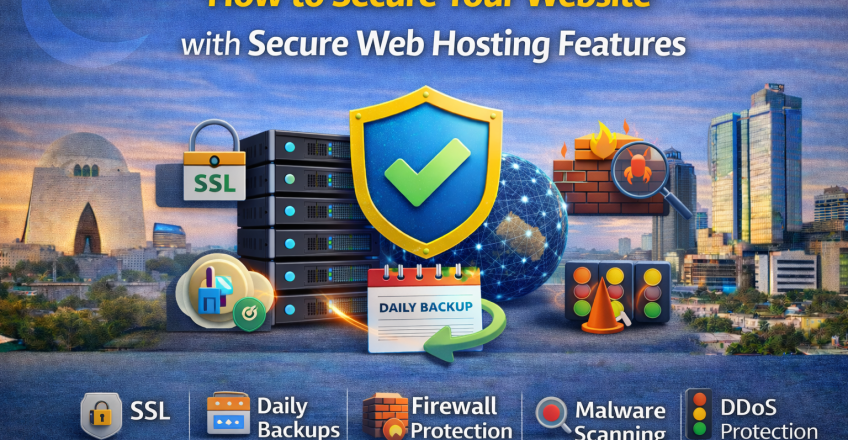

If your website were a house, would you leave the front door open with a sign saying, “Hackers, please come in”? Of course not.
Yet many website owners forget one important thing — security starts with secure web hosting.
You can install plugins, use strong passwords, and pray every night… but without the right hosting features, your website is like a castle built on sand.
Let’s break it down in simple (and slightly dramatic 😄) terms.
1. SSL Certificate – Your Website’s Bodyguard
First things first: SSL.
If your website still shows “Not Secure” in the browser bar, that’s basically the internet shouting, “Danger! Danger!”
A good secure web hosting provider includes a free SSL certificate. This encrypts data between your website and visitors.
Why it matters:
- Protects login details
- Secures payment information
- Builds visitor trust
- Helps SEO rankings
No SSL = no trust. And no trust = no business.
2. Daily Backups – Your Safety Net
Imagine updating your website… and boom 💥 everything crashes.
That’s where backups save your sanity.
Reliable secure web hosting always includes automatic daily backups. If something goes wrong, you can restore your website in minutes instead of crying for hours.
Backups protect you from:
- Hackers
- Human mistakes
- Plugin conflicts
- Server errors
It’s like having an “Undo” button for your entire website.
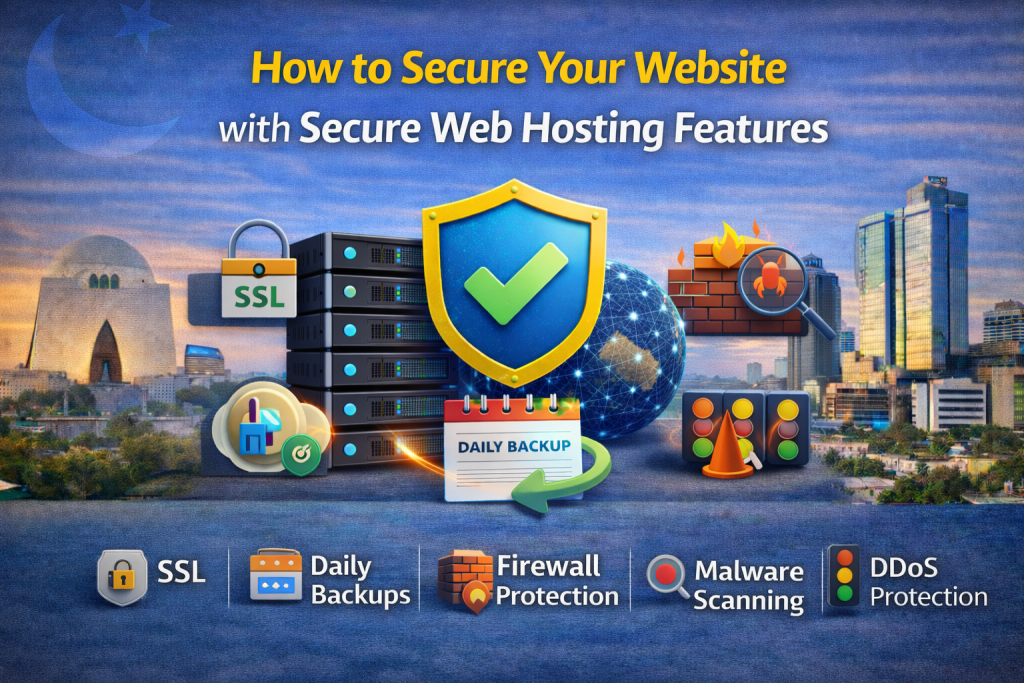
3. Firewall Protection – The Digital Security Guard
A firewall blocks suspicious traffic before it even touches your website.
Think of it as a strict security guard saying,
“Sorry sir, you look suspicious. Access denied.”
Strong secure web hosting includes built-in firewalls that:
- Block malware attacks
- Stop brute-force login attempts
- Prevent DDoS attacks
Without a firewall, your website is basically standing in the rain without an umbrella.
4. Malware Scanning – The Health Checkup
Websites can get infected silently.
You may not even know something is wrong until:
- Google blacklists your site
- Visitors see warning messages
- Traffic suddenly drops
That’s why secure web hosting includes automatic malware scanning and removal.
It’s like sending your website for a daily medical checkup — prevention is better than cure.
5. Strong Server Infrastructure – The Foundation
Security isn’t just about plugins. It starts at the server level.
High-quality secure web hosting providers use:
- Updated server software
- Isolated accounts
- Secure data centers
- 24/7 monitoring
If the server itself is weak, no plugin can fully protect you.
6. Two-Factor Authentication – Extra Lock
Passwords alone are not enough anymore.
Two-Factor Authentication (2FA) adds another security layer. Even if someone steals your password, they still need a verification code.
Many secure web hosting dashboards support 2FA to protect your account.
More locks = fewer problems.
7. Regular Updates & Patch Management
Hackers love outdated software. It’s their favorite snack.
A good secure web hosting provider keeps servers updated and patches vulnerabilities quickly.
This reduces security gaps before hackers even notice them.
8. DDoS Protection – Website Traffic Shield
DDoS attacks try to overload your website with fake traffic until it crashes.
Strong secure web hosting includes DDoS protection systems that filter fake traffic and keep your website online.
Because downtime equals lost visitors, lost money, and lost sleep.
Our Trusted User:
Share this Post
Why Daily Website Backups Are Important
EcomiHost BlogBeginner’s Guide to cPanel Hosting
EcomiHost Blog