


When people think about SEO, they usually focus on keywords, backlinks, and content. Those things matter, but they are not the full picture. Your hosting also plays a major role in how your website performs in search results. That is where hosting speed and SEO become impossible to ignore.
A fast hosting environment helps your website load quickly, stay available, and deliver a smoother experience to every visitor. Google pays attention to those signals because it wants to rank websites that serve users well. If your site is slow, unstable, or frequently down, even great content can struggle to perform. If you understand the link between hosting speed and SEO, you can make smarter decisions that support both rankings and conversions.
Why Fast Hosting Matters More Than Most People Realize
The connection between hosting speed and SEO starts with user experience. When a visitor lands on your website, they expect the page to load almost instantly. If it takes too long, many users leave before they even read the first line. That quick exit sends a negative signal. It tells search engines that your page may not be giving users the experience they want.
Google wants to rank pages that are helpful, relevant, and easy to use. Speed supports all three. A fast-loading page helps visitors stay longer, explore more pages, and take action with less friction. In practical terms, hosting speed and SEO affect how long people stay on your website, how many pages they visit, and whether they trust your brand enough to continue. When your hosting is strong, your content gets a better chance to perform.
Fast hosting also improves key performance signals such as server response time, page stability, and loading consistency. These factors matter because users do not judge your website only by design. They judge it by how smooth it feels. A website that responds quickly feels more professional, more reliable, and more trustworthy.hosting speed and SEO
Google Rankings Depend on More Than Content Alone
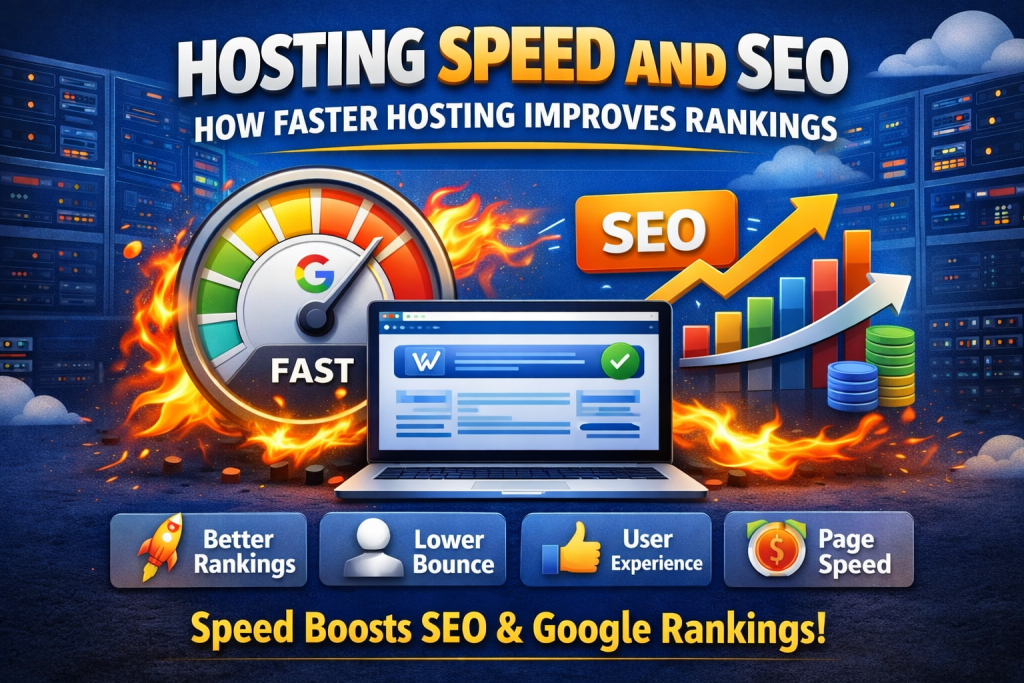
Many website owners assume that great content will rank no matter what. In reality, content works best when the technical foundation is strong. Another reason hosting speed and SEO matter is crawl efficiency. Search engines send bots to discover and index your pages. If your server is slow, overloaded, or unstable, those bots may crawl fewer pages or take longer to process your content.
That can slow down indexing and limit your visibility, especially if you have a growing website with many pages, products, or blog posts. A reliable hosting setup helps search engines access your site more smoothly. It also reduces the risk of downtime, which can hurt both user trust and search performance. Strong hosting speed and SEO performance also supports mobile users, who often browse on slower connections and expect fast results. Since Google uses mobile-first indexing, your mobile experience matters more than ever.
Hosting quality also influences Core Web Vitals, which are performance signals related to loading speed, interactivity, and visual stability. While content remains essential, poor hosting can drag down these metrics. That means a slow server can weaken the impact of your SEO work, even if your on-page optimization is strong. In simple terms, content and performance should work together, not compete with each other.
How Better Hosting Improves Site Performance
Not all hosting plans deliver the same level of speed. Some providers use outdated infrastructure, overloaded shared servers, or weak security systems that slow websites down. Others offer modern tools that help sites perform better from day one. Good infrastructure turns hosting speed and SEO into a real advantage.hosting speed and SEO
For example, SSD storage helps your website access files faster than traditional storage. LiteSpeed servers can improve loading performance and support better caching. Cloudflare CDN integration helps deliver your content from locations closer to your visitors. Daily backups, strong security, and reliable uptime also protect performance by keeping your website stable and available.
These features may sound technical, but their impact is easy to understand. Faster loading means better engagement. Better engagement supports stronger SEO outcomes. When business owners invest in the right tools, hosting speed and SEO stop being technical buzzwords and start becoming practical growth drivers. The right hosting plan makes it easier for your website to stay fast during traffic spikes, product launches, and busy business hours.
This matters even more for WordPress websites, business sites, and eCommerce stores. Online stores need quick product pages, fast category browsing, and smooth checkout performance. Business websites need a polished experience that builds trust instantly. Blogs need stable performance so readers can browse without delay. In all of these cases, the hosting layer shapes the user experience before the content even has a chance to shine.hosting speed and SEO
Slow Hosting Hurts More Than Rankings
The damage caused by slow hosting goes beyond search rankings. It affects conversions, trust, and revenue. If your contact form loads slowly, you may lose leads. If your store takes too long to open product pages, you may lose sales. If your blog feels sluggish, readers may never return.
People rarely complain about speed directly. Most of the time, they just leave. That silent loss is what makes slow hosting so dangerous. A fast website creates momentum. A slow website creates friction. When users face friction, they hesitate, bounce, or abandon the session completely.
That is why website speed should never be treated as a minor detail. It is part of your brand experience. It shapes how users feel about your website in the first few seconds. It also influences whether search engines see your site as a reliable result for future users. Speed supports trust, and trust supports growth.hosting speed and SEO
What Smart Website Owners Should Do
If you want better results from your website, start by reviewing your hosting environment. Check your page speed, uptime, server response time, and mobile performance. Make sure your hosting includes modern performance features such as SSD storage, caching support, free SSL, backups, security protection, and scalable resources.
You should also choose a hosting plan that matches your website’s real needs. A simple business website may need a different setup than a busy WooCommerce store or a multi-site agency account. When your hosting matches your traffic, content, and growth goals, your website performs more consistently.
In the end, hosting speed and SEO are not separate topics. They work together to shape your visibility, user experience, and long-term growth. If your hosting is fast, stable, and reliable, your SEO efforts become much more effective. Good content brings people in, but fast hosting helps keep them there. That combination is what gives your website a stronger chance to rank well and grow with confidence.
Our Trusted User :
Share this Post