


Many website owners publish pages, write blog posts, and add keywords, yet they still struggle to rank on Google. The reason is often not a lack of effort. It is a lack of structure. Small issues in content, technical setup, and page experience can hold a site back for months. In many cases, basic SEO errors can stop even a good website from getting the visibility it deserves.
SEO is not only about adding keywords to a page. It is about helping search engines understand your website and helping users enjoy it once they arrive. If your site is slow, confusing, thin on value, or hard to crawl, rankings suffer. That is why fixing the foundation matters so much.
Why Small SEO Problems Create Big Ranking Losses
Many basic SEO errors look harmless at first. A missing meta title may not seem urgent. A broken internal link may feel like a small issue. A page with weak headings may still look fine to the human eye. But search engines evaluate websites based on clarity, relevance, structure, and experience. When those signals are weak, rankings drop quietly over time.
This is also where design and SEO start to connect. Many people ask, what are common web design mistakes to avoid when building a website. That is a smart question, because poor design choices often create SEO problems too. Cluttered layouts, unreadable text, weak navigation, and bad mobile responsiveness are not just web design mistakes. They also reduce engagement, hurt usability, and send poor quality signals to search engines.basic SEO errors
Ignoring Search Intent Is One of the Biggest Ranking Problems
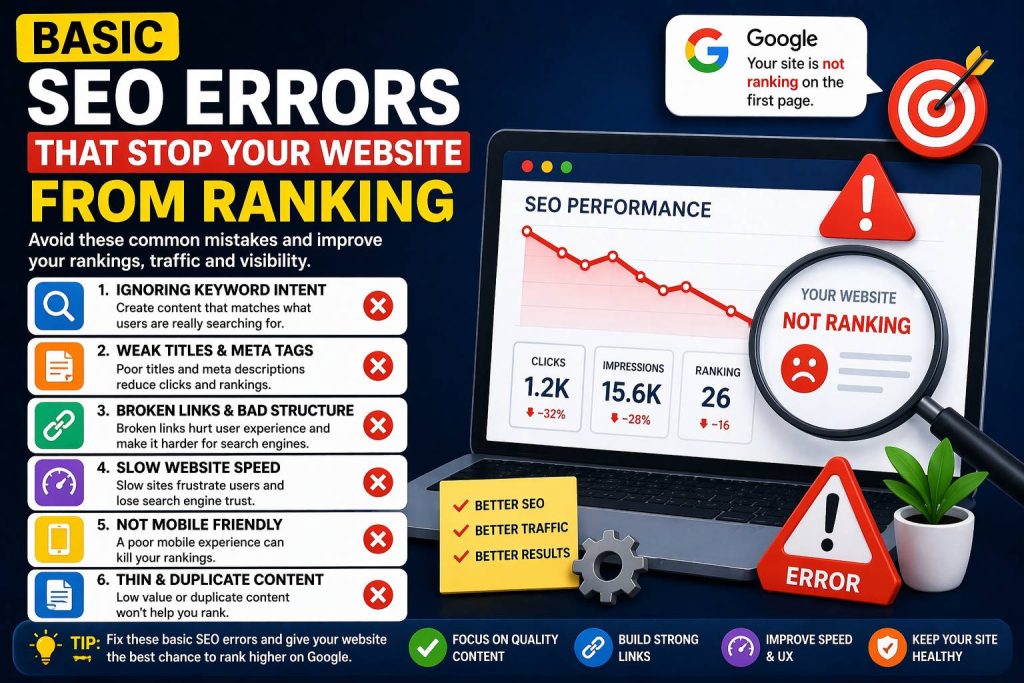
One of the most damaging basic SEO errors is ignoring search intent. Many pages are written for the business owner instead of the user. A company may want to talk about its services, but the user wants answers, clarity, and solutions. If your content does not match what people are actually searching for, Google has no strong reason to rank it.
For example, if someone searches for a guide, they expect useful steps and real explanations. If your page gives them only a sales pitch, they leave. That quick exit hurts engagement. Good SEO content should answer the search clearly, naturally, and completely. It should solve a problem, not just repeat a keyword.
This is one reason some attractive websites still fail to rank. They focus so much on presentation that they forget usefulness. Some of the top website design mistakes happen when style takes priority over function. A page should look polished, but it should also answer the user’s need without making them work too hard.basic SEO errors
Weak Titles, Headings, and Meta Tags Hurt Visibility
Another group of basic SEO errors appears in the parts of the page that search engines read first. Your title tag, meta description, URL, and headings all help explain what the page is about. If they are vague, duplicated, or poorly written, your content becomes harder to understand and easier to ignore.basic SEO errors
A strong title should be clear and specific. A heading structure should guide the reader naturally. A meta description should encourage clicks without sounding robotic. These elements may seem small, but they influence both visibility and click-through rate. If users do not click your result, rankings often stay weak even when your page is indexed.
This is also where many site owners make layout-related mistakes. They use headings for style instead of structure, or they skip heading levels completely. Those are not just formatting issues. They are SEO issues. Search engines rely on clean structure to interpret page topics properly.basic SEO errors
Slow Speed, Poor Mobile Experience, and Bad UX Block Rankings
Some basic SEO errors are not about words at all. They come from performance and usability. If your website loads slowly, shifts while loading, or feels frustrating on mobile, users leave quickly. Google notices those signals because it wants to rank pages that create a good experience.basic SEO errors
A fast website feels professional and trustworthy. A slow website feels broken, even when the content is strong. Mobile design matters just as much. Text must be readable, buttons must be easy to tap, and the layout must stay clean on smaller screens. Many so-called SEO problems are actually hidden user experience problems.
This is why SEO and design should never be treated as separate worlds. Heavy sections, oversized images, confusing menus, and distracting animations may look creative, but they can damage performance. In many cases, these are classic web design mistakes that also weaken SEO. Better rankings often come from simpler, cleaner, faster pages.
Broken Links and Poor Site Structure Confuse Search Engines
Broken site structure creates basic SEO errors that make your website harder to crawl and harder to trust. When pages are disconnected, links are broken, or important content is buried too deeply, search engines struggle to understand the site as a whole. Users struggle too.
Internal linking helps visitors move from one useful page to another. It also helps search engines discover content and understand page relationships. If your website has broken links, outdated URLs, or redirect problems, a link fixer process becomes important. You can handle this through careful audits, plugin support, or manual cleanup. The goal is to create a healthier site structure that feels smooth for users and clear for crawlers.
Good navigation also matters here. If service pages, blogs, and key resources are difficult to find, your strongest content may stay invisible. SEO growth often depends on good connections between pages, not just good writing on isolated posts.
Thin Content, Keyword Stuffing, and Duplicate Pages Hold You Back
Thin content and duplication are basic SEO errors that many website owners underestimate. Some pages are too short to be useful. Others repeat the same ideas with slightly different wording. Some are overloaded with keywords in a way that sounds unnatural and weakens readability.
Google rewards helpful content, not empty repetition. A page should give real value, explain the topic clearly, and answer follow-up questions naturally. It should also avoid unnecessary duplication across service pages, city pages, or blog posts. If two pages target the same idea with almost the same content, they may compete with each other instead of helping the site grow.
This is especially common on websites built in a rush. Owners focus on volume instead of quality, then wonder why rankings do not improve. One useful, well-structured page often performs better than several thin pages that say very little.basic SEO errors
Technical Issues Can Destroy SEO Without Warning
Technical gaps can turn small issues into basic SEO errors that damage rankings very quickly. Missing sitemaps, crawl blocks, bad redirects, security warnings, and indexing problems can all reduce visibility. In WordPress, plugin conflicts or memory problems can even create a wordpress website white screen, which is not just a design issue. It can make pages inaccessible and cause serious traffic loss if not fixed quickly.
Technical SEO does not have to be scary, but it does need attention. Make sure your website is secure, indexable, mobile-friendly, and easy to crawl. Check for broken redirects, duplicate versions of URLs, and page errors. Keep plugins, themes, and core files updated so small technical bugs do not become bigger performance or SEO failures.basic SEO errors
Final Thoughts
If you fix basic SEO errors, your website becomes easier to crawl, easier to understand, and far more useful for real people. That is what strong rankings are built on. Better SEO does not always start with advanced tricks. It usually starts with removing confusion, improving structure, and making the website genuinely helpful.
Share this Post

Basic Website Setup Errors That Slow Down Your Site
EcomiHost BlogBasic Domain and Hosting Errors New Website Owners Make
EcomiHost Blog