


Many businesses invest in design, products, and marketing, but they still struggle to grow online because of basic website errors. These issues often look small at first, yet they quietly damage trust, reduce conversions, and push visitors away before they take action. A business website should help people understand your brand, trust your offer, and contact you without confusion. When that does not happen, growth slows down.
The worst part is that most owners do not notice these problems early. They assume traffic is low because of competition or weak marketing, when the real issue is a poor website experience. That is why understanding basic website errors matters so much. Once you learn what to look for, you can fix the weak points, improve user experience, and turn your site into a stronger business asset.
Why Small Website Problems Create Big Business Losses
A website is often the first impression people get from your business. If it loads slowly, looks outdated, or feels confusing, visitors may leave without reading anything important. This is where basic website errors become expensive. They affect how users see your business in the first few seconds.
People judge a website very quickly. If they cannot find your services, your contact details, or a clear next step, they lose confidence. The same thing happens when your site feels cluttered, your buttons do not stand out, or your pages look broken on mobile devices. A weak user experience creates hesitation, and hesitation lowers conversion rates. A strong business website should guide users clearly, answer their questions, and make action simple.basic website errors
Slow Speed and Poor Mobile Experience Push Users Away
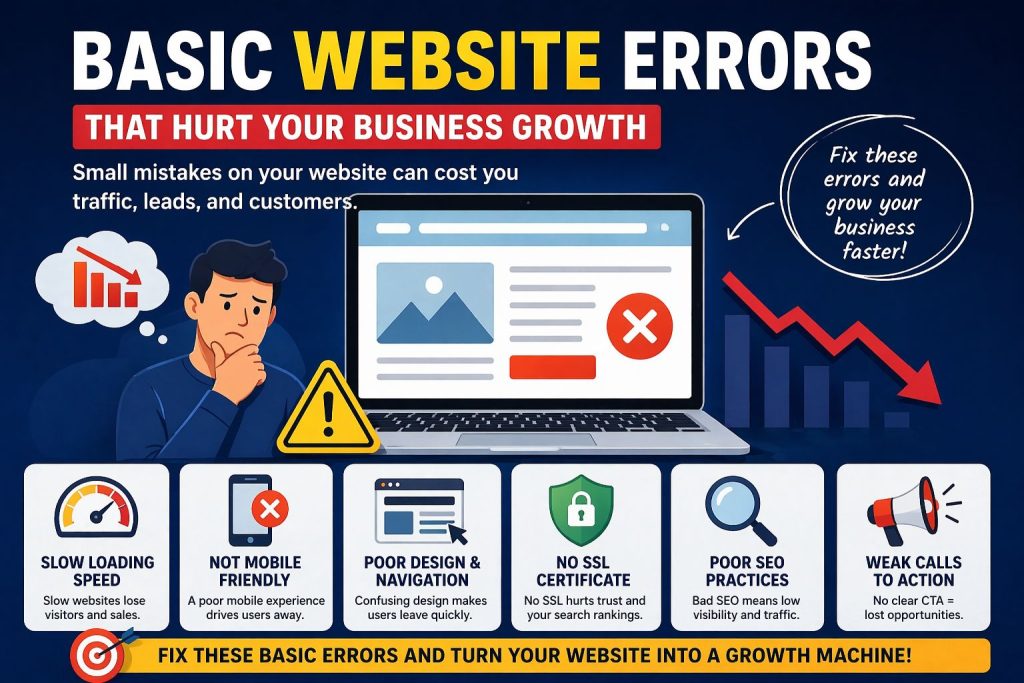
One of the most damaging problems for any business website is slow performance. Visitors expect pages to load fast. If your site takes too long, many people leave before they even see your content. Search engines also pay attention to speed, which means performance affects both users and rankings. Among the most common basic website errors, slow loading speed is one of the hardest on business growth.
Mobile usability matters just as much. Most users now browse from phones, not desktops. If your website is hard to read on a small screen, users will not stay long. Text that looks too small, buttons that are hard to tap, and layouts that break on mobile all hurt engagement. A modern business site should feel smooth on every device. Fast hosting, optimized images, clean layouts, and mobile-friendly design all help create that experience.basic website errors
Confusing Design and Weak Trust Signals Reduce Conversions
A website does not need to look flashy to perform well, but it must feel clear and trustworthy. Many brands lose sales because they make the design too busy or forget the basics that help people feel safe. These basic website errors include unclear headlines, poor navigation, missing calls to action, weak service descriptions, and inconsistent branding.
Trust signals also matter. Visitors want to know who you are, what you do, and why they should choose you. If your site has no business email, no customer proof, no clear policies, or no secure connection, users may leave even if your offer is good. The same happens when contact information is hard to find or when service pages feel too vague. Strong websites build confidence with simple structure, readable content, clear pricing or service explanations, and visible contact options.basic website errors
Weak SEO Foundations Hurt Your Visibility
A beautiful website cannot help your business if no one finds it. Many business owners post content and expect traffic, but they ignore the technical and structural side of SEO. That is where basic website errors quietly reduce visibility. Missing meta titles, poor heading structure, thin content, broken links, duplicate pages, and badly written URLs all make it harder for search engines to understand your site.
SEO is not only about keywords. It is also about clarity, structure, speed, and relevance. Search engines want to rank websites that are useful and easy to navigate. If your pages are disorganized or your content does not answer user intent clearly, rankings suffer. A well-optimized site uses strong headings, descriptive service pages, internal linking, and high-quality content written for real people. When you remove technical confusion and improve content quality, your site becomes easier to crawl, easier to rank, and easier to trust.basic website errors
Poor Calls to Action Waste Good Traffic
Many businesses work hard to bring visitors to their website, but they still miss leads because they do not guide users properly. This is one of the most costly basic website errors because it turns good traffic into lost opportunities. A visitor may like your offer, but if you do not tell them what to do next, they may leave without contacting you.
Every important page should have a clear purpose. Do you want users to call you, request a quote, send a message, or place an order? Make that action obvious. Your buttons should stand out. Your form should be simple. Your service pages should lead naturally toward the next step. When your website removes friction and shows users exactly where to go, conversion becomes much easier.
Outdated Content Makes Your Business Look Inactive
Fresh and accurate content builds credibility. Outdated content does the opposite. If your website still shows old offers, expired prices, broken images, or last year’s information, visitors may assume your business is inactive or careless. These basic website errors hurt trust even when your company is doing great in real life.
This problem appears often on service websites. Homepages say one thing, service pages say another, and contact details do not match. Blog posts may have useful ideas, but the site around them looks abandoned. Regular updates help fix this. Review your core pages, check your links, refresh your service descriptions, and make sure every important detail still reflects your business today. A current website feels alive, and that helps people trust your brand.basic website errors
How to Fix These Problems Without Starting Over
The good news is that you do not need to rebuild everything from scratch. Most basic website errors can be fixed through smart updates. Start by reviewing your homepage, service pages, mobile layout, and contact flow. Ask yourself a few simple questions. Does the website load quickly? Is the design clean? Can a new visitor understand the offer in seconds? Is the next step clear?
Then improve the basics one by one. Compress large images, use better hosting, simplify navigation, rewrite weak headings, add stronger calls to action, and make sure your site works well on mobile. You should also review SEO essentials such as title tags, page structure, internal links, and page speed. Small improvements in the right areas can create a noticeable difference in both rankings and results.basic website errors
Final Thoughts
Business growth online depends on trust, clarity, and performance. When your website feels fast, clear, and professional, users stay longer and act with more confidence. When it feels slow, confusing, or outdated, people leave. That is why fixing basic website errors should be a priority for any business that wants better leads, stronger SEO, and more consistent growth.
Our Tursted User:
Share this Post

Common Basic Hosting Errors Beginners Should Avoid
EcomiHost Blog